 Make your cows happy.
A happy cow is a productive cow.
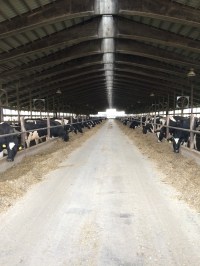
When cows are fed good nutrition and live in clean, comfortable and stress free conditions they produce more milk. This was my key takeaway on a beautiful Michigan, fall afternoon that I spent with a dozen dietitians and a dairy herd of 3200 Holstein not counting the 2 that were born that morning.
 The living conditions on this farm included:
- 8 inch sand beds in lieu of cold hard concrete for standing and sleeping.
- Spacious, free stall housing enabling each cow to move freely.
- Well ventilated living conditions providing for the hot air to rise and escape, drawing in cool fresh air from the sides and good, clean air quality for each cow and calf.
- Rafters that inhibited birds from perching or nesting that improved the sanitation of the herds dwelling space
- Readily accessible feed and clean water.
- A good stereo system that played a steady but calming beat as the cows were milked.
At $0.17/cup milk is a nutrient power house supplying nine essential nutrients including high quality protein. That’s a $0.20/cup savings on rice, soy, almond, cashew or coconut milks. Cow’s milk comes by its protein naturally too. Milk alternatives are actually more processed and heavily fortified than the real deal yet still fail to match its nutritional density, containing five or fewer essential nutrients. They also travel further. For example the nutritional label on cow’s milk:
Low Fat Milk, Vitamin A, Vitamin D
Locally made, from farm to cup in 48 hours
Versus a commonly consumed almond milk:
Almond Milk (Filtered Water, Almonds), Cane Sugar, Sea Salt, Locust Bean Gum, Sunflower Lecithin, Gellan Gum, Calcium Carbonate, Vitamin E Acetate, Vitamin A Palmitate, Vitamin D2.
Commercially made, often shipped from California
 In health care we reduce the spread of infection through good hand hygiene “Wash in, wash out, every patient, every time.” It’s similar in the dairy industry “Wash in, wash out, every teat, every time.” Prior to and after milking, each teat is sanitized to keep our milk supply safe and the cow healthy. The farms are federally inspected every 6 weeks and processing plants are inspected every 3 weeks. All milk is sampled and tested before being shipped out. If a batch of milk is found to have antibiotics in it, the farm is sourced and the tank is dumped. That farmer is not only heavily fined and could lose their permit if a repeat violator, but must also repay the other contributing farmers for their product loss.
Michigan Facts
- Every container of milk has a 5-digit code. The first 2 digits are the state code and the next 3 digits are the processing plant code. Michigan’s state code is 26. (Our A+ college senior, dietitian-to-be attendee commented that this is because we were the 26th state to be entered into the union.)
- From farm to glass, each cup reaches you within 48 hours.
- Michigan has 90 dairy processing plants.
- Michigan ranks 7th in United States milk production.
- 98% of Michigan dairy farms are family owned.
- Michigan Dairy Farmers have pledged not to use growth hormone.
Fun Farm Facts
- Cows sleep 8 hours a day, just like us but not all at one time.
- Cows are social animals they like to stick together. I had a chef friend who owned a farm and likened her cows to labrador retrievers who bounded up to meet her at the fence line each day after work.
- A healthy cows internal temperature ranges from 100-102 degrees Farenheit
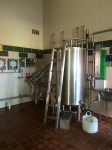

 Her milk averages 96 ºF and is sent through a reverse chiller where it reaches 34 ºF for safe transportation to the milk processors.
- A cow is pregnant for 283 days and loses 200 pounds at delivery between her calf and fluids.
- The top 3 expense on a farm in order of highest to lowest is 1) feed 2) Labor 3) waste management. Waste management is quickly overtaking labor costs.
- The United States dairy industry is responsible for only 2 percent of greenhouse gas emissions. Methane gas from cow manure is being used as a renewable energy source to generate farm electricity and sold as natural gas for cars, homes and businesses.
- Low fat chocolate milk is a great, cost-effective recovery drink for athletes. The 3:1 carbohydrate:protein ratio is the perfect glycogen replacement for energy and amino acid mix for muscle repair. For this reason it’s the number one beverage consumed in the Olympic Village other than water.

More Resources
Why Olympic Athletes Refuel with Chocolate Milk
Raise Your Glass: Milk or A Non-Dairy Alternative?
Non-Fat Chocolate Milk, Vote Yes in Schools
Categories: Nutrition & Wellness
 The Dietitian's Digest
Leave a comment