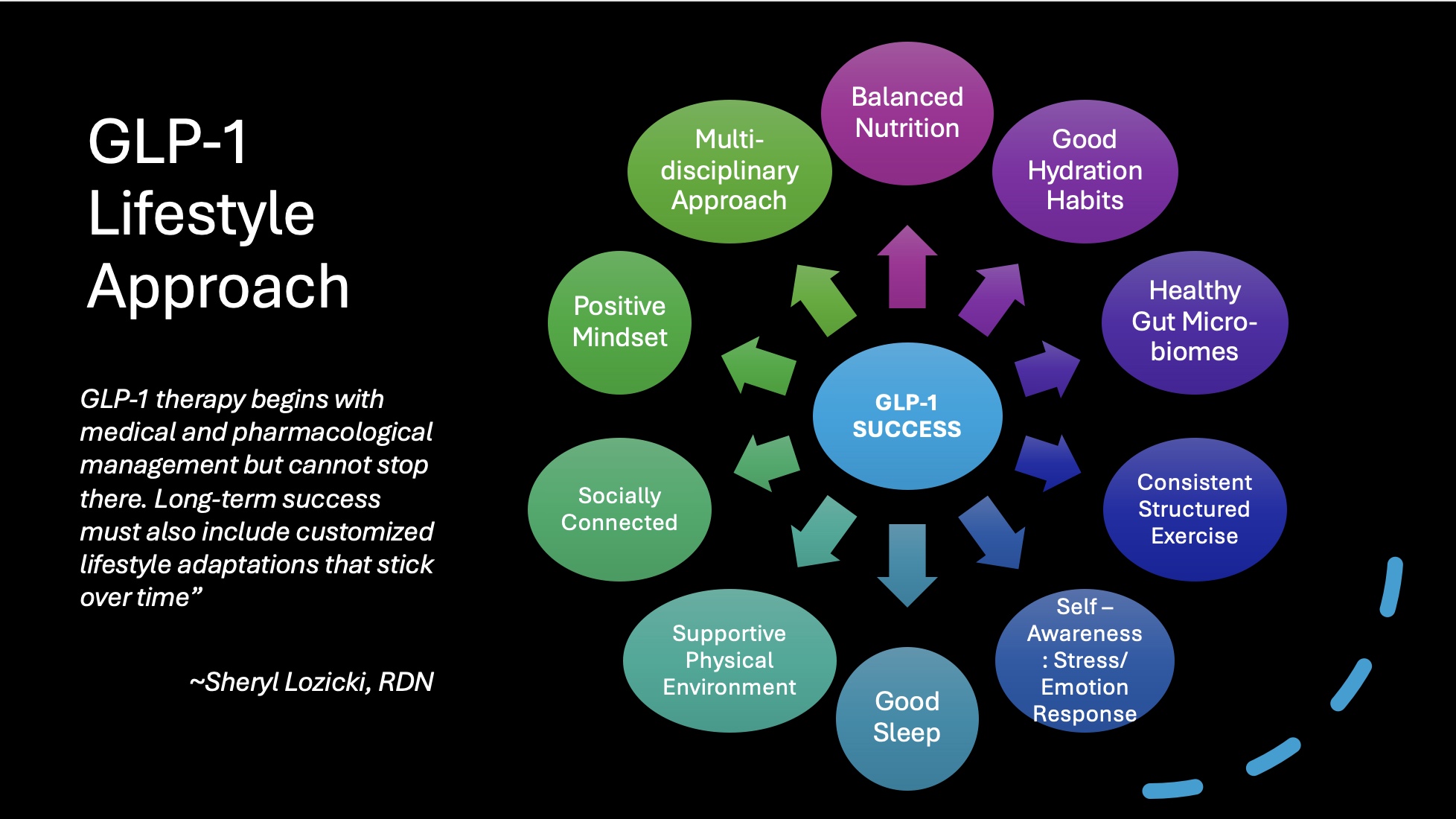
GLP-1 therapy is most effective when paired with evidence-based nutrition and lifestyle care, according to a 2025 joint advisory from major obesity, nutrition, and lifestyle medicine organizations. While it begins with medical and pharmacologic treatment, long-term success rarely depends on medication alone. Sustainable results are enhanced when treatment is paired with personalized lifestyle strategies that can be maintained over time and begin during the active weight loss phase. These include nutrition, hydration, movement, sleep, stress regulation, and environmental and social support systems that help reinforce healthy routines.

- Balanced Nutrition: Focus on nutrient-dense foods that provide adequate protein, fiber, vitamins, and minerals, especially as appetite decreases. A well-balanced eating pattern can help preserve muscle mass, support energy levels, and reduce the risk of nutritional deficiencies during weight loss.
- Good Hydration Habits: Drinking enough fluids is important for digestion, energy, and overall function, and it may also help reduce constipation or other gastrointestinal side effects that can occur with GLP-1 therapy. Consistent hydration supports day-to-day comfort and adherence and helps to avoid confusing hunger for thirst.
- Healthy Gut Microbiome: A diet rich in fiber, minimally processed foods, and plant diversity support a healthier gut environment. This can contribute to digestive health, regularity, and better tolerance of dietary changes over time. A healthy gut microbiome is also associated with improved response to weight loss therapy, mental, cardiovascular and brain health.
- Consistent, Structured Exercise: Regular physical activity supports cardiovascular health, helps preserve lean muscle during weight loss, and improves long-term weight maintenance. Strength training is especially valuable to help protect muscle mass while on appetite-suppressing medication. Muscle preservation is non-negotiable; muscle growth is highly desirable and both are dependent on an adequate protein intake. Muscle growth enhances metabolism which is a longterm strategy during both weight loss and maintenance.
- Self-Awareness and Stress Management: Learning to recognize stress, emotional triggers, and non-hunger eating patterns can improve decision-making and reduce setbacks. Stress-management skills can make it easier to respond intentionally rather than react impulsively.
- Good Sleep: Consistent, restorative sleep supports appetite regulation, energy balance, mood, and recovery. Poor sleep can make it harder to maintain healthy routines and may interfere with long-term metabolic health.
- Supportive Physical Environment: Daily surroundings strongly influence behavior. Keeping healthy foods visible and accessible, reducing friction around exercise, and designing routines that fit real life can make healthier choices easier to repeat.
- Social Connectivity: Support from family, friends, clinicians, or community groups can improve accountability, motivation, and resilience. Long-term change is often easier to sustain when people feel encouraged rather than isolated. Seek out people who share in your health goals.Surround yourself with people who practice self improvement, engage in an active lifestyle, enjoy healthy food and make you smile
- Positive Mindset: A realistic, growth-oriented mindset helps people stay engaged through plateaus, side effects, and routine adjustments. Long-term success is more likely when progress is measured by consistency, health gains, and resilience rather than perfection alone. Make your goal to live each day better.
- Multidisciplinary Approach: Long-term success is often stronger when care is coordinated across disciplines. When feasible, support from a medical doctor, registered dietitian, therapist, and athletic trainer or exercise professional can help address medical needs, nutrition, behavior change, and physical function in a more comprehensive and sustainable way.
My clients hear me refer to these as “forever more” goals. These are strategies that help improve their health metrics during active weight loss, and more importantly weight maintenance and vitality for the many years that follow.